
The Invisible Cost of Waiting: The 3-Second Rule
The most immediate factor driving conversions is basic human psychology. We are conditioned to expect instant answers. Research shows that if your mobile website takes more than 3 seconds to load, you've likely lost over half of your potential audience right there. It's not just about how quickly the page finally loads; it’s about how quickly it feels like it’s loading. When critical elements, like your main headline or a product image, pop up quickly, you manage the visitor's patience, encouraging them to stick around. Every moment of latency registers as a frustrating experience, which ultimately taints their perception of your brand as a whole.
The Bottom Line: Where Conversions Go to Die
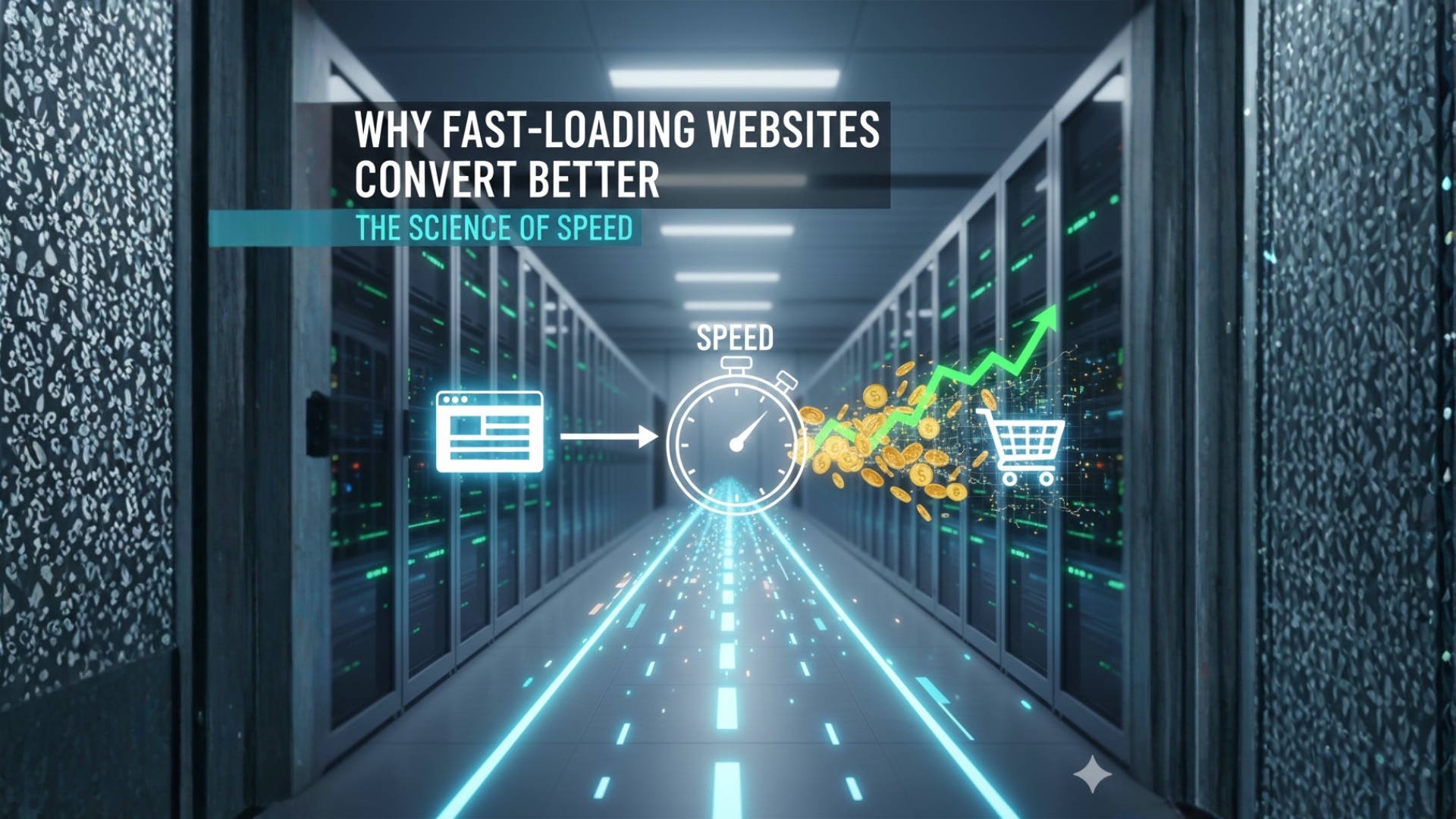
While the psychology is clear, the financial impact is staggering. When a page slows down, your revenue slows down even faster. Think of it this way: a simple one-second delay in your page load time can cause your conversions to drop by as much as 7%. On the flip side, the rewards for being snappy are huge. For e-commerce sites, shaving just 0.1 seconds off your load time can translate to an over 8% increase in conversions. Fast sites don't just keep visitors; they encourage them. People are far more likely to browse deeper and visit multiple pages when the experience is instantaneous and friction-free. Your speed is literally making you money.
How Google Grades Your Experience: Core Web Vitals
Google, recognizing that speed equals quality, has formalized its ranking based on what they call Core Web Vitals (CWV). These are metrics designed to measure the real-world experience of a user visiting your site, and they are now essential for both search ranking and conversion rate optimization. Instead of generic "site speed," Google looks at three key user-centric moments: Loading Time (LCP): This measures how long it takes for the largest, most important element on your page (the hero image or main block of text) to fully appear. If a visitor has to wait more than 2.5 seconds to see your main content, you're not passing the test. Interactivity (INP): This measures responsiveness—how quickly your page responds after a user clicks a button or taps a link. A delay here means the page feels sluggish and broken. Your site needs to feel alive and ready to respond in an instant. Visual Stability (CLS): This is all about preventing frustrating layout shifts. Have you ever tried to click a button, only to have a sneaky banner ad or image pop in and push the button down, making you click the wrong thing? That's high CLS, and it’s a conversion killer that Google is actively penalizing. By focusing on these human-centric moments, you're not just pleasing an algorithm; you're fundamentally improving the quality of the interaction, making it easy and enjoyable for people to convert.
Simple Steps to Instant Gratification
Making your website fast requires attention to detail, but you don't need to be a developer to understand the basics: Slim Down Your Images: Images are often the heaviest files. Make sure they are compressed, properly sized, and utilize modern formats like WebP. Implement lazy loading so images only load as the user scrolls to them. Clean Up the Code: Removing unnecessary, messy code (a process called minification) can make your files lighter and quicker to transmit. Use a Global Delivery Network (CDN): A CDN stores copies of your content on servers all over the world, ensuring that when a visitor from far away clicks your site, the content is delivered from the nearest location, dramatically cutting down on load time. Declutter Your Plugins: Too many third-party plugins and scripts can weigh down your site like anchors. Regularly audit and remove anything you aren't actively using.
Summary
Ultimately, a fast website is about respect. It shows your customer that you value their time and are reliable. Stop sacrificing conversions to slow loading times; make speed the foundation of your success.